
Can Reform Run Milton Keynes?
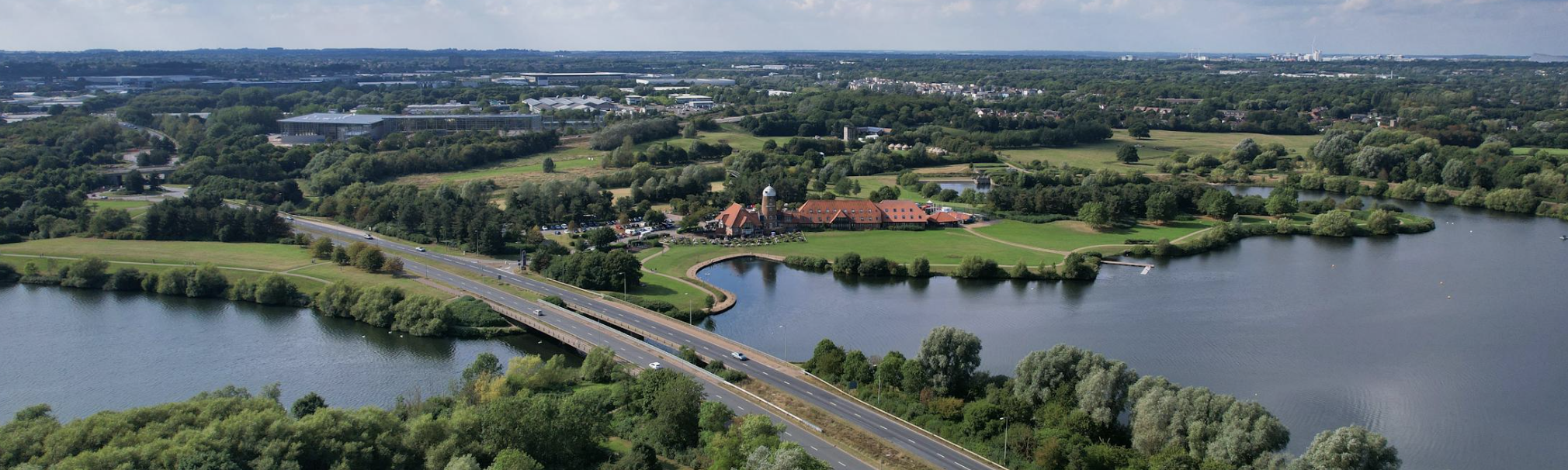
Milton Keynes was designed in 1967 as a deliberate experiment in planned prosperity - grid roads, linear parks, a managed pipeline of middle-class mobility. Sixty years on, the model is working. The city's economy is now worth £16.7bn in GVA (Gross Value Added), productivity sits 25% above the national average at £85,000 per filled job, and there are 189,000 jobs across roughly 12,000 businesses. This puts MK in the top 8% of UK local authorities for employment and the top ten cities in Britain for output per hour worked.
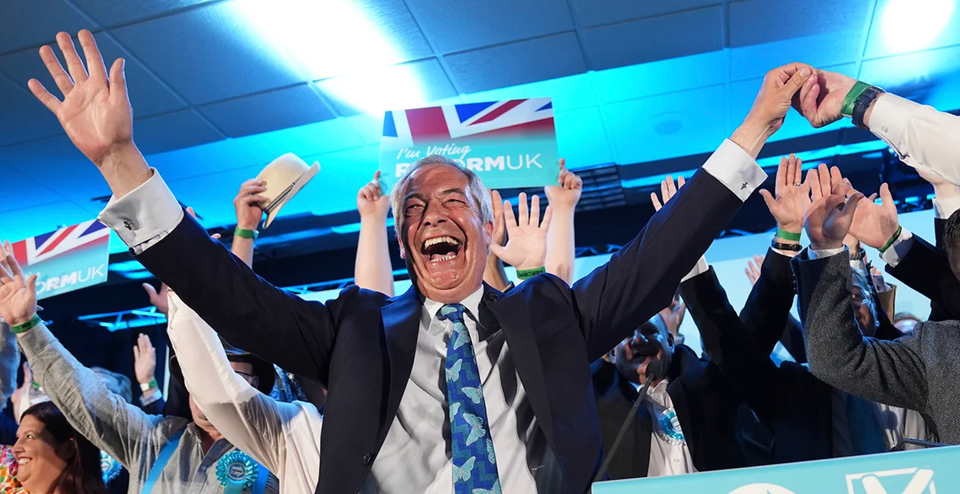
A strong Reform showing in the all-out council elections would not be a routine swing. It would be a vote against the core ideas the city has run on since designation: planned growth, infrastructure-led investment, and the assumption that MK keeps growing, both economically and physically. The ideas under which Reform is running (a council tax freeze, a freeze on peripheral development, a retreat from the 2030 Net Zero target) is internally consistent. It is also, on its own terms, managed decline of our city.
Three pressure points are worth watching.
The first is East West Rail. The Oxford–Bletchley track has been physically complete for over a year and is still not running passenger services, blocked by an unresolved driver-only-operation dispute. Reform's big idea is to redirect any local financial commitment from EWR into the city's aging grid roads - an argument that polls well with motorists and badly with anyone trying to attract a Cambridge biotech firm to open an MK office.
The Fast Growth Cities group - of which MK is one - modelled in February that the six-city cluster could add £21bn to UK GVA by 2035 and £78bn by 2050 if connectivity, water and housing constraints are unlocked. The city's positioning as the central node of the Oxford–Cambridge corridor only works if the corridor is operating; "phantom rail" is a Westminster headache, and now a potentially serious problem for the future of our city.
The second is housing. Westminster's growth target implies tens of thousands of new homes in MK over the next decade, much of it on the grey-belt land adjacent to the M1. The pace matters more than the absolute number: MK delivered the highest rate of housing-stock growth of any UK city between 2023 and 2024, adding more than 2,000 homes in twelve months - and beat its housing target seven years running.
Reform's position is to block peripheral development. The political logic is simple - older homeowners vote, they want their views protected, and they actually turn out on the day. The economic effect is to lock supply in a city whose median wage is already £36,261 (£8.6% above the national average) but whose average property price has reached £344,237, against a national average of £294,910. A development freeze in a constrained-supply market is a wealth transfer from young workers to existing owners.
The third is the staff of the council itself, people who live and work in this city. Reform's national pitch on local government efficiency points toward AI-driven headcount reductions; how that translates into MK specifically is not clear as they have botched their attempts elsewhere so far. What can be said is that MK runs more multi-year infrastructure bids than most unitary authorities, and those bids are won by people who know the funding cycles. Cut that too hard and the council loses the institutional memory it needs to keep landing the grants the city's growth model benefits from. The current vacancy on the council careers page lists a dozen-plus open posts in the £30k–£64k bracket; Reform's manifesto would shrink that base, not staff it up.
On Net Zero, Reform has been clear it would scrap the 2030 commitment. The pitch is regulatory relief for logistics and manufacturing — sectors MK has plenty of (transport and storage alone generates £842m in annual GVA, 5.6% of the city's economy, and which would benefit at the margin. The cost is a softer version of the city's positioning to ESG-aligned capital.
MK has not won Goldman Sachs, Santander, Red Bull Racing or Rightmove on green credentials alone, but the values are part of the city's offering. Removing them takes away part of the allure for businesses that don't all hold the same narrow values as Reform and operate in a global environment with broader perspectives.
None of this means Reform is wrong on every count. The council has spent money badly in places. EWR's delays are embarrassing. There are residents whose views genuinely could be filled in by housing they did not ask for, even though all of this was fields once. Five-year business survival in MK runs at 43% - better than many UK cities, but a reminder that the headline start-up numbers don't all become long-term employers.
What is harder to argue is the package. A tax freeze, a development freeze, a Net Zero rollback and a withdrawal from EWR are individually defensible and collectively a manifesto for a smaller, older, more fortress-shaped city.
MK has spent 60 years being the opposite of that - adding 162,000 residents since 1981, more than two and a half thousand new businesses in 2023 alone, and lifting more than half the neighbourhoods classified as income-deprived in 2010 out of that category by 2025. The election result will tell us whether the residents who built this city have learned the lessons of this growth, or whether they will stop the city's growth and begin the slow process of decline faced by so many other English cities.